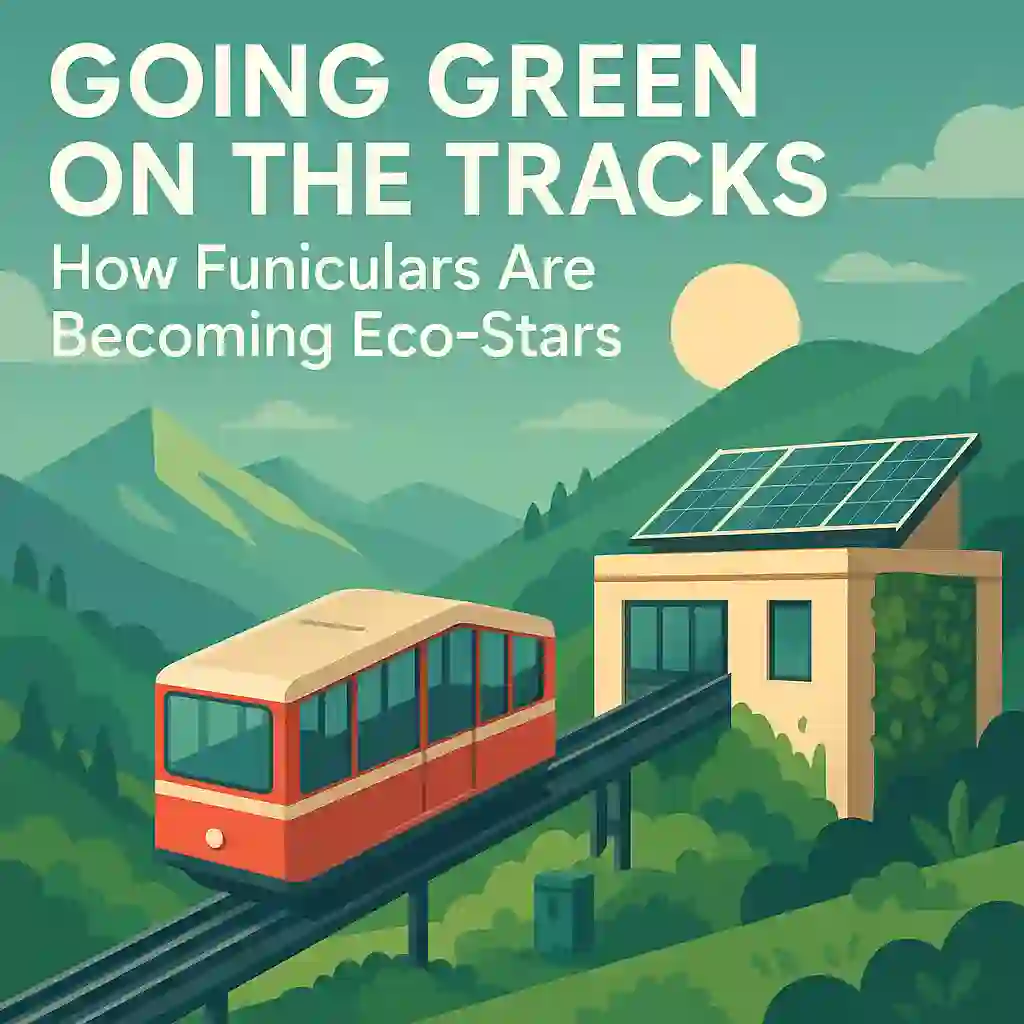

Green Funiculars : Funicular railway have always been marvels of engineering — climbing steep slopes with ease while offering breathtaking views. But today, these historic systems are being reimagined for a greener future. Cities worldwide are upgrading funiculars with solar energy, regenerative braking, vertical gardens, and sustainable architecture.
This article explores how Bilbao, Switzerland, Scotland, Chile, and Germany are pioneering eco-friendly funicular upgrades, turning transport icons into environmental champions.
Artxanda Funicular, Bilbao: A Green Makeover
Bilbao’s Artxanda Funicular is one of the best examples of how a historic transport system can be modernized sustainably.
-
The upper station has been completely redesigned to allow more natural light and ventilation, cutting down energy consumption.
-
Engineers installed 220 solar panels, making the funicular less dependent on the city grid.
-
Through regenerative braking systems, the funicular now recycles energy during every descent, improving efficiency by up to 80%.
-
Perhaps the most innovative addition is the vertical garden at the lower station, which absorbs over 15 tonnes of CO₂ every year, improving urban air quality.
These changes transformed the Artxanda into more than just a transport system—it became a symbol of Bilbao’s green future. Unsurprisingly, the funicular recorded its highest passenger numbers in 2023, with over 1.1 million riders.
Cairngorm Funicular, Scotland: Safety Meets Sustainability
The Cairngorm funicular railway is the highest in the UK, running in the Scottish Highlands. After being closed for years due to structural issues, it reopened following a £25 million renovation program.
Upgrades included:
-
Strengthening of viaduct structures.
-
Gearbox repairs and rail grinding for durability.
-
Eco-conscious maintenance plans to ensure long-term sustainability.
Though it mainly focused on safety, the renovation reflects how heritage systems can be revived with an eye on eco-friendly practices.
Switzerland: Leading the Way in Sustainable Funiculars
Stoosbahn: Steep & Smart
Switzerland is home to the world’s steepest funicular — the Stoosbahn. Its futuristic design combines efficiency with cutting-edge engineering, making it a model of sustainable mountain transport.
Fribourg Funicular: Wastewater Power!
One of the most unique systems in the world, the Fribourg funicular runs entirely on wastewater. Tanks are filled at the top station and emptied at the bottom, using gravity to power the cars. A brilliant example of circular economy in action!
Chile & Germany: Preserving History, Building Green Futures
Valparaíso, Chile
The historic Valparaíso funiculars, some dating back to the 19th century, are undergoing restoration projects. The upgrades aim to preserve cultural heritage while improving sustainability for daily commuters.
Dresden Suspension Railway, Germany
Unlike traditional systems, Dresden’s Schwebebahn is a suspended funicular. Modernization efforts include efficient power systems and regular eco-friendly upgrades, ensuring the 1901 landmark keeps serving the city sustainably.
Why Green Funiculars Matter
Funiculars may seem small compared to metros or highways, but their impact is meaningful:
-
Lower carbon emissions through renewable energy.
-
Preservation of cultural icons while meeting modern needs.
-
Boosting tourism by offering eco-friendly travel experiences.
-
Smart city alignment with global sustainability goals.
As climate change pressures grow, transport systems — even niche ones like funiculars — play an important role in shaping greener cities.
FAQs
Q1. What makes a funicular “green”?
Funiculars become eco-friendly when upgraded with renewable energy, regenerative braking, eco-conscious design, and reduced emissions.
Q2. Which funicular is the steepest in the world?
Switzerland’s Stoosbahn, with gradients up to 110%.
Q3. How does the Fribourg funicular run on wastewater?
By using tanks filled with wastewater at the top station to create gravitational pull that powers the cars.
Q4. Why are cities modernizing funiculars now?
A mix of heritage preservation, sustainability goals, and growing tourism demand.
Q5. Are green funiculars cost-effective?
Yes — renewable energy cuts costs long-term, and eco-upgrades attract more ridership.
Conclusion
Funiculars once symbolized historic transport, but today they are fast becoming green stars of urban mobility. From Bilbao’s solar-powered system to Switzerland’s wastewater-driven marvel, these upgrades prove that tradition and sustainability can work hand-in-hand.
The future of funiculars is not just about moving people up and down hills — it’s about lifting cities towards a cleaner, greener tomorrow.


